
Voicelessness
On enforced silence, conflict and transitions

I lost my voice four days ago, completely out of the blue. Woke up one morning and it had just disappeared! Today I was supposed to be doing a series of interviews for a long, fairly involved piece, one which has taken months to set up, but I’ve had to put it all aside.
I tried to make an appointment with the doctor, but the receptionist hung up abruptly, convinced she was being prank-called. I can’t call up the stairs, leave a voice memo, can’t seem to do much at all. It makes you realise, when you lose your voice, how much of the day is spent trying to communicate, and how much of it really is just meaningless chatter.
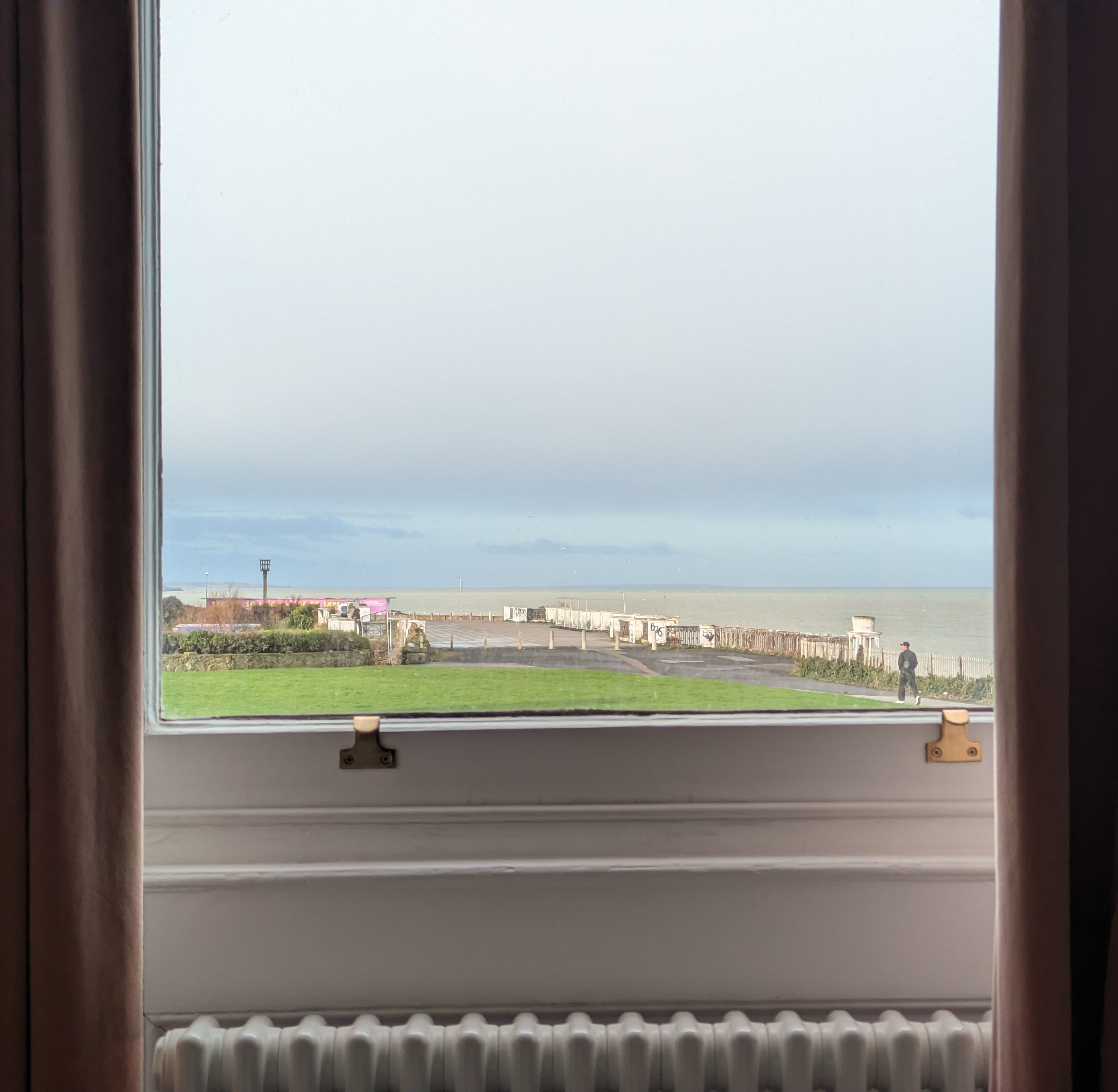
All of this sounds frustrating and I suppose, in a way, it should be. On the Kent coast earlier this week, as it hailed and lashed against the window, I looked out at dog-walkers and runners, buried under their hoods, mole-like. I got cosy, drank ginger and lemon tea, spent hours colouring-in with my son. When we ventured outside to the Turner, my useless musings couldn’t be heard, so I kept them to myself. There’s peace to be found in the silence.
Too much is made of the voice, anyway. The writer’s voice, finding your voice. I haven’t got much patience for this kind of thing usually, but enforced muteness has given me more time than usual to think about it. For the last decade in journalism, I’ve adopted the style of whichever paper I’m writing for. It becomes formulaic, knowing that by paragraph three you need to include this, then a statement here, a right to reply there.
Towards the end of drafting the manuscript for my book, I knew I wouldn’t be able to go back to reporting. It wouldn’t be the same, writing 800-word news pieces. All those short, sharp sentences; facts can be so hard. Other writer friends have said the same thing: when you have 300 pages to write how you write, it changes things. The freedom! It’s difficult to go back to what you were doing before when you’ve found some sense of yourself on the page.
Over the last decade, my work has largely been about giving voice to people who might not ordinarily be heard. There are barriers to those on the margins - linguistic and cultural barriers, educational ones, too - but there’s an inherent conflict there. I have never fled for my life, never known what it is to be displaced. Is it my place to tell their stories? Will it change anything for them if I do?
Currently I’m stuck between being able to hear their stories and tell them. I can listen, but I can’t respond, or ask questions, or express as much sympathy as I usually would. It won’t be for much longer, but it’s taught me a lot, these last days. Being voiceless is more debilitating than I realised.
I’m going through a distinct period of transition, so the timing of all this may or may not be a coincidence. Perhaps silence is what’s needed, after so much talking. Talking on stage, talking on the radio. I will be able to make myself understood again, and I’ll need to, but for now, being quiet is not so bad. More time to read - Rebecca Perry, George Saunders, Cal Flyn, Miriam Toews - and to get ready for whatever’s next. Moving out of one thing, moving into another.
There has been some conflict in my life recently, too, which has been a long time in the making, and which I have avoided for too long, as I tend to do. Almost as soon as I expressed everything that had been so pent up, my voice was gone, like it needed a break after speaking up for myself, words that had once seemed so forbidden. Now maybe, finally, it’s time to move forward, to find courage rather than resting, restlessly, in the silence.
Another heartfelt, engaging article -
I keep hoping that more people will listen to voices like yours - thank you for what you do
I hadn’t thought about the challenge of going back to reporting after having the freedom of writing without limits for your book. Interesting perspective - thanks for sharing